At the heart of NMSU’s Las Cruces campus, a tower rises above the profiles of surrounding buildings, standing sentinel and solemn as throngs of chatting students pass by each day on their way to class.
Once part of the university’s Quesenberry Field, the tower was built as a memorial to Aggies lost to the Second World War — the culmination of a remembrance effort begun by the university’s longtime registrar, Era Rentfrow ’19, who made it her personal duty to reach out to these young men’s families and collect their portraits to memorialize their sacrifice.
Though the field’s stands are long gone and a new Aggie Memorial Stadium arose elsewhere on campus, the tower still stands as part of the university’s Health and Social Services Building, and through the research efforts of a few dedicated Aggies, many more portraits have been added to the walls of its Aggie Memorial Room, honoring servicemen lost to wars and conflicts throughout the university’s history.
Now, the results of that research — not only photos, but stories of these men, their heroism, their sacrifice, and the families and loved ones they left behind — are available online, making this ongoing act of service and remembrance available to anyone seeking to honor those fallen Aggies by learning about their lives.
The site, titled “Aggies to Recall,” provides a searchable repository for the stories and information gathered over the years by retired NMSU Vice President Ben Woods. It’s a passion project Woods has led, with help from NMSU’s Library Archives and Special Collections, Marketing and Communications Office, family members of servicemen, Aggie alumni and others. He views it as a continuation of Rentfrow’s work, which began during World War II.
“When the Second World War began, it’s hard to understand the transformation it made to the college,” Woods says. “Most of the students by the end of the war were in uniform. Era Rentfrow, on her own … began reaching out personally, not on behalf of the university, but as Miss Rentfrow, to the families. She asked if they’d be willing to share a photograph of their son, and she continued to do that throughout the remainder of the Second World War.”
Stories like this are etched in Woods’ mind. Asked about most any of well over a hundred portraits displayed inside the tower, he’s able to speak about that man’s life and family. In gathering their stories, he’s become the unofficial historian of the lives of these servicemen — a role that is deeply personal and humbling.
“It struck me that there was a debt we owed,” Woods says. “These young men earned whatever honor we give them, but the pictures we don’t show are their mothers, their fathers, their sons, their daughters, their friends, their wives, and those people that lived with their loss for years, for decades – and that the debt we owed was not just to remember these remarkable young men, but to really fulfill that responsibility we had for the benefit of those that followed and that bore that grief for the remainder of their life.”
Woods understood that to really fulfill the university’s responsibility to these men, he needed to find a way to make their stories accessible to anyone who wanted to learn more and reflect on their lives. He partnered with Melissa Chavira ’03 ’05 ’11, NMSU’s executive director of marketing, web and brand management, who compiled and edited the stories and photos that Woods gathered and created the aggiesremembered.nmsu.edu site to organize and display them for anyone to access.
“Working with Ben on this project has been one of the most meaningful experiences of my 20 years working at NMSU,” Chavira says. “It has been incredibly humbling to help preserve the legacy of the students memorialized in the tower; building on the work that began with Era Rentfrow in 1922, carried forward through the tower’s rededication in 2004, and strengthened over the last decade through Ben’s dedication to researching biographies and collecting photographs of the students honored there.
“My hope is that by creating a digital archive of these stories, we can ensure the magnitude of sacrifice continues to be honored and is remembered for generations to come, while also making the stories accessible to those who may never have the opportunity to visit the tower in person,” Chavira says.
More information about the history of Aggie Memorial Tower, as well as Rentfrow’s role in establishing the tradition of honoring fallen servicemembers, can be found in the Aggies to Recall digital archive at aggiesremembered.nmsu.edu. The Aggie Memorial Room in the tower is accessible weekdays from 8 a.m. to 5 p.m. for quiet reflection or study.
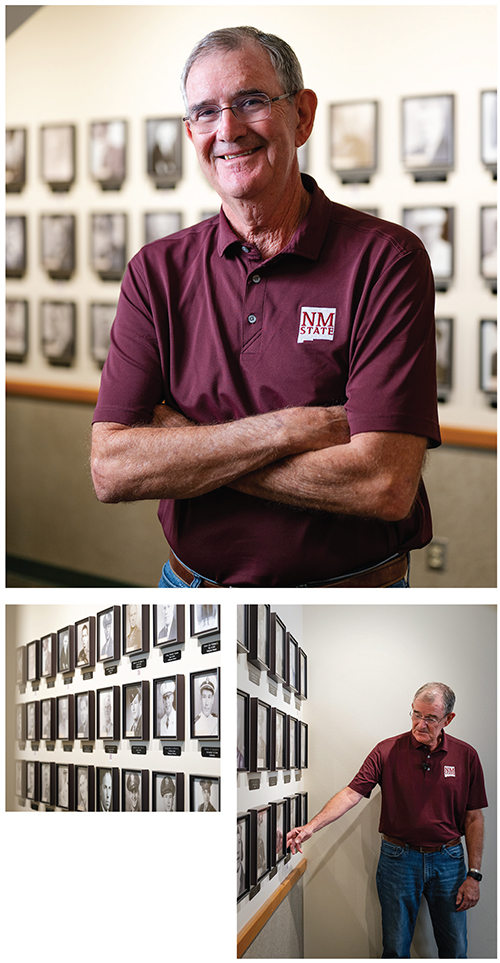
Memorial Tower is part of the Health and Social Services Building at NMSU and houses the photographs of fallen Aggie servicemen whose stories are now accessible in a digital archive. The site provides a searchable repository for the stories and information gathered over the years by retired NMSU Vice President Ben Woods.
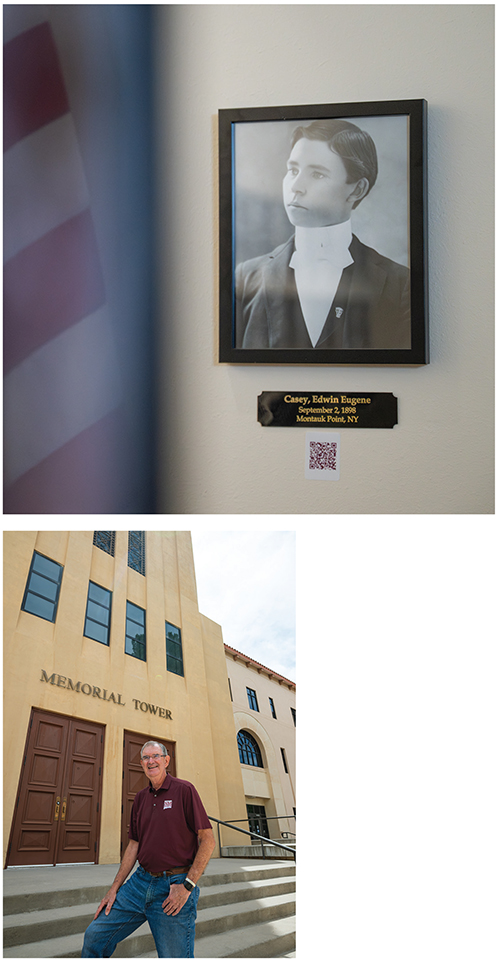
The photographs of fallen Aggie servicemen displayed in Memorial Tower date back all the way to the Spanish-American War, in which U.S. Army Private Edwin Eugene Casey, the youngest graduate on record of New Mexico Agricultural and Mechanic Arts College, died of typhoid while preparing to muster out to the front.

1305 N. Horseshoe Street
Las Cruces, NM 88003

